


If the bank can’t help in some specific situations, then the private lenders are there for you. They can give you solutions. But many often wonder: Are private lenders safe? The answer basically depends on who you borrow from and how careful you are.
In this blog, we’ll explain how they work, what to watch out for, and how to borrow safely and smartly. So, let’s get started without wasting any more time.
What Are Private Lenders?
Private lenders are people or companies that offer loans outside of traditional banks. They can be mortgage investment companies, individual investors, or businesses that offer loans.
They often help people who have bad credit or can’t meet strict bank rules. By offering specialized private loans, they take more risks and normally charge higher interest rates.
How Do Private Lenders Operate?
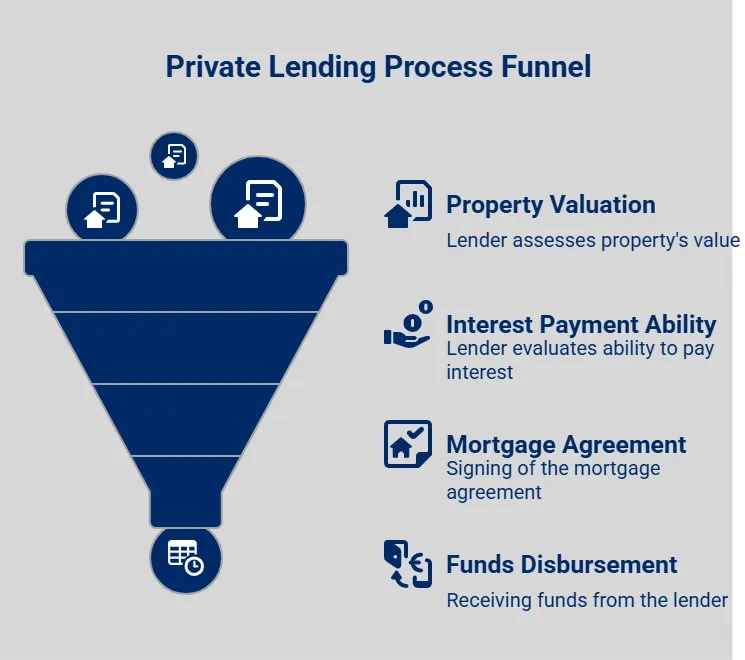
They work differently from banks. They care more about the property you are buying or refinancing than your income or credit score. Here’s how the process works:
How to Determine If a Private Lender Is Safe?
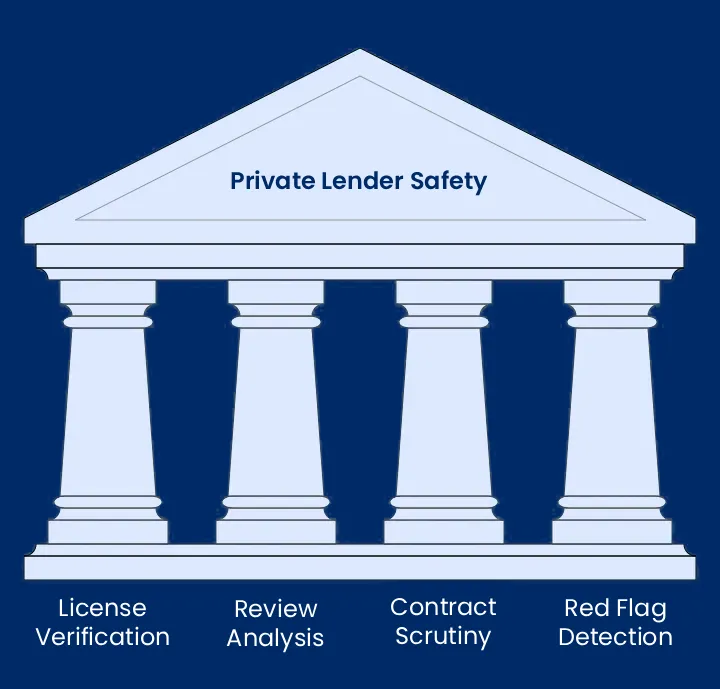
Are private lenders safe in Canada? It’s important for you to know about this and make sure the one you choose is honest. Here are ways you can check:
- Verify the license: Check if they have the FSRA (Financial Services Regulatory Authority). You can look them up online, and this license will confirm they’re safe.
- Search for reviews: Check if the lender has a website, contact info, and customer feedback. Avoid the ones with bad reviews or no online presence.
- Check the contract: Read every part of the agreement before you make a deal. You can ask a lawyer or broker to review it if needed.
- Watch for red flags: Be careful if they ask for large fees before you hire them. Also, be careful if they do not explain the terms clearly.
What Are the Benefits and Risks of Private Mortgage Lenders?
There will always be some benefits and some risks when you are hiring someone. Here are some benefits and risks so that you can be prepared:
Benefits
- Quick approval: You don’t have to wait weeks with a private lender. It will take a few days to get approval.
- Easier rules: They don’t follow bank rules. You may still qualify with low credit or high debt.
- Short-term use: If you need money fast or for a short time, then this is the best option for you.
Risks
- High interest: Their rates are normally higher than bank rates. Many charge 7% to 15%.
- Extra fees: You might have to pay lender fees, broker fees, and legal fees.
- Short repayment term: These loans are not long-term. If you can’t repay or renew, you might lose your home.
- Scams: Some fake ones ask for money before starting the work and disappear.
Regulatory Landscape and Legal Protections
Private lenders in Canada must follow provincial rules. In Ontario, the FSRA watches over mortgage brokers and lenders. In British Columbia, it’s the BC Financial Services Authority.
Here are some rules that they must follow:
- They must be licensed if they deal with the public.
- Follow the Interest Act, which controls how interest is charged.
- They have to provide a written agreement that explains the loan clearly.
Tips for Borrowers Considering Private Lenders
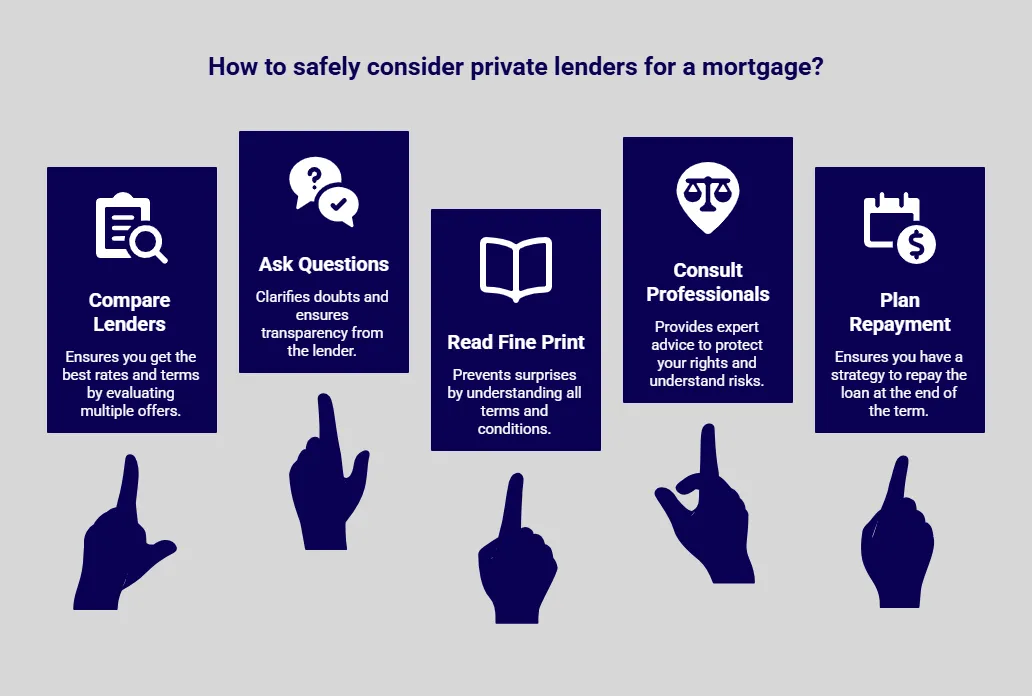
Are Private Lenders safe for a mortgage? Here are some tips for you when you are hiring a professional:
Conclusion
So, are private lenders safe? They can be, but only if you do your homework properly and find out the risks of private mortgages. They offer quick and flexible loans, but they also come with higher costs and risk. Always check the lender’s license, read every document, and ask for help if you don’t understand something. Be careful when choosing the right one; do not make any decision without thinking!