


Applying for a loan can feel like a big step, but it doesn’t have to be complicated. If you want to use the value in your home to get cash, being prepared is the best way to make things go smoothly. A little bit of paperwork is all it takes to get started. This guide gives you a simple checklist that answers the main question: what documents are needed for a home equity loan?
We’ll walk you through everything, so you can gather your papers and unlock your home’s value without any stress.
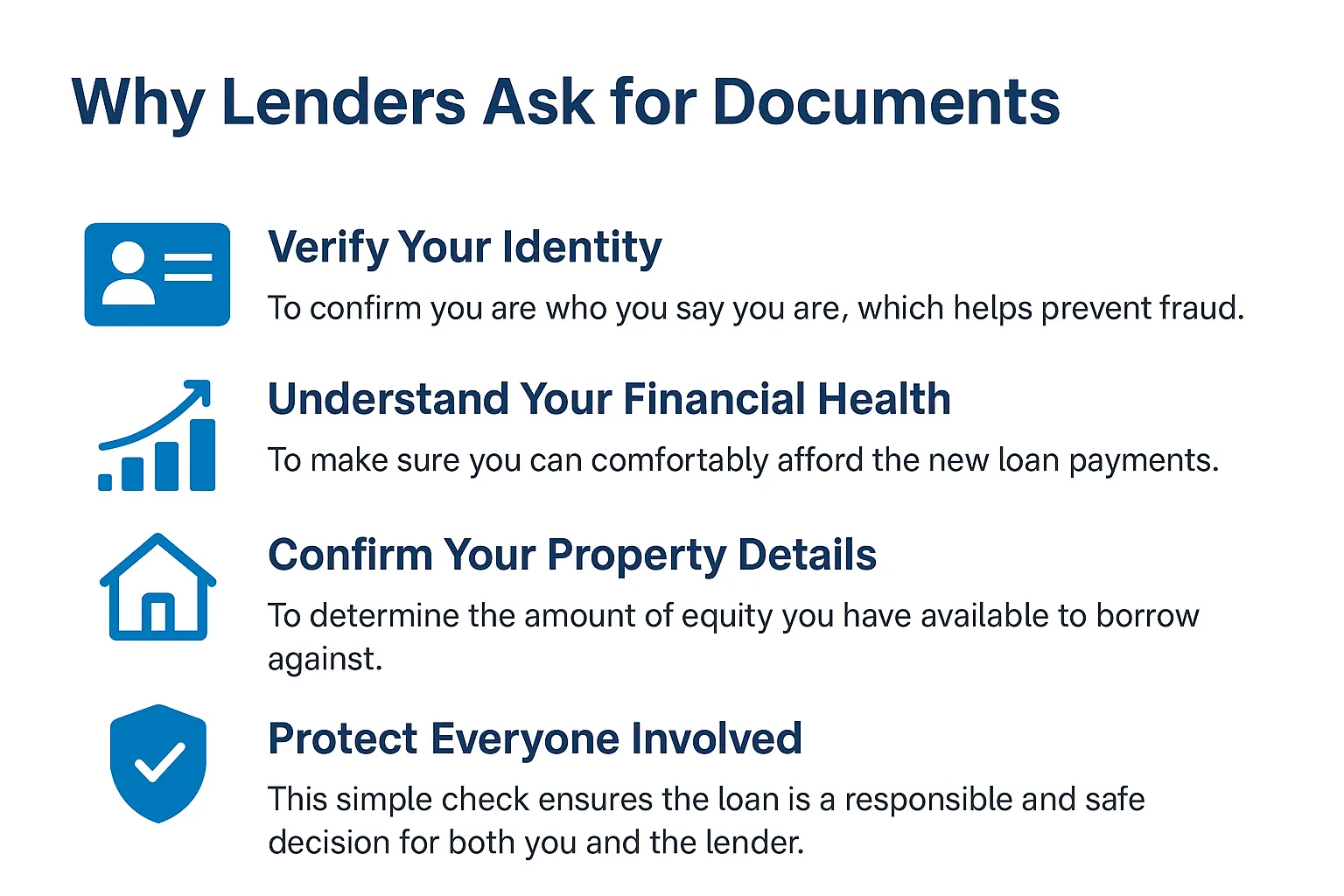
Why Lenders Ask for These Documents
Before we get to the list, it helps to know why lenders need this information. They aren’t trying to make things hard for you; they just need to confirm a few important things to ensure the loan is a good fit for everyone.
Your Home Equity Loan Document Checklist
Getting your papers in order is the most important part of the application. Here is a clear breakdown of the documents you will likely need:
1. Personal Identification
First, the lender needs to confirm who you are. This is a standard step for any financial application. You will need to provide a clear copy of a government-issued photo ID.
- Driver’s license.
- Passport.
- Provincial photo card.
2. Proof of Income and Employment
Next, lenders need to see that you can afford the loan payments. While banks can be very strict about this, private lenders are often more flexible. You will usually be asked for a few of the following:
- Recent pay stubs (from the last month or two).
- Your latest T4 slips.
- A letter of employment from your job.
- A Notice of Assessment (NOA) from the CRA, which is common if you are self-employed.
3. Property Information
This is the key part of a home equity loan application because your home is the security for the loan. To learn more about how home equity loans work, it all comes down to the value of your property.
- Your most recent mortgage statement.
- A recent property tax statement.
- Proof that you have active homeowners’ insurance.
- A copy of the Property Title or Deed.
4. Details on Existing Debts
Finally, the lender will want to see a full picture of your finances. This includes any other debts you might have, which helps them understand your overall financial situation.
- Statements for car loans, lines of credit, or other loans.
- Recent credit card statements.

What if My Situation is Unique? (Self-Employed or Bad Credit)
Not everyone has a simple financial picture, and that’s okay. The list of documents needed for a home equity loan can be adjusted for your situation. Even if a bank has said no, you still have great options.
If you are self-employed, you might provide business bank statements instead of pay stubs. If you have bad credit, remember that private lenders like Seven Lending can help. They will focus more on your home’s equity, not just your credit score.
The Process After You Submit Your Documents
Once you’ve handed in your paperwork, the process moves forward in a few simple steps. Here’s what you can expect:
- Document Review: The lender will carefully look over all the papers you submitted to make sure everything is in order.
- Home Appraisal: A professional appraiser will determine the current market value of your home.
- Final Approval: After the review and appraisal, the lender will give you the final approval for the loan.
- Signing and Funding: You will review and sign the official home equity loan closing documents. After that, the funds are transferred to you
When you have everything ready, you can see for yourself how a home equity loan is made easy.
Tips for a Faster Approval Process
Want to speed things up? Here are a few simple tips:
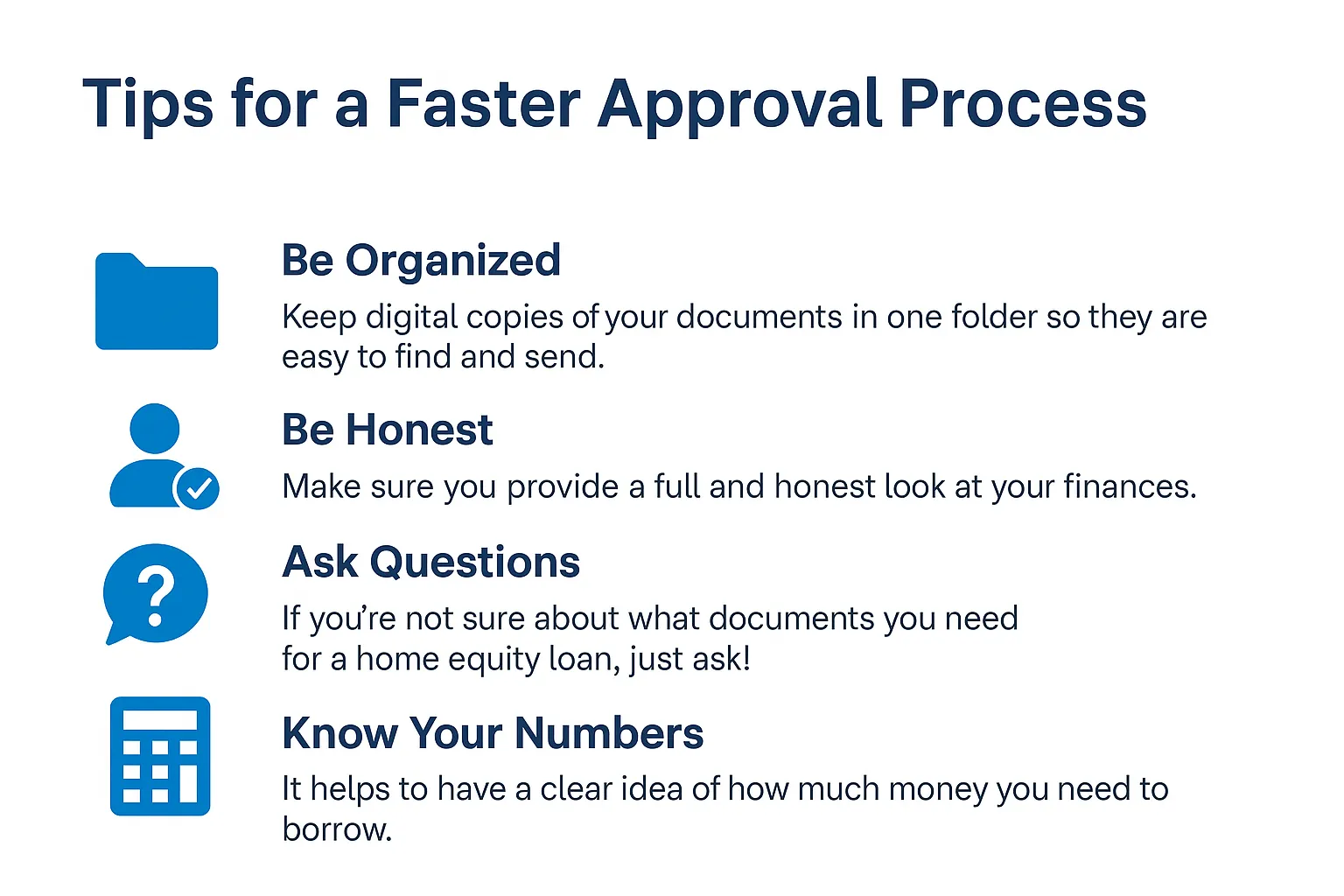
You can even use a home equity loan calculator to get an estimate.
Conclusion
Getting a home equity loan is all about being prepared. With your documents organized, you can move through the process quickly and confidently. It’s the most important step you can take for a stress-free experience.
Now that you know what documents are needed for a home equity loan, you are much closer to getting the funds you need. If you have any questions or need some guidance, feel free to contact our team for help.
About the Author:
Raghav Manchanda is the Co-Founder of Seven Lending, a leading private mortgage lender in British Columbia. With extensive experience in alternative financing, Raghav specializes in helping homeowners access their equity by simplifying the application process.