

There is nothing more frustrating than being rejected for a mortgage when you know you can afford the payments. This is a common story for entrepreneurs in BC, whose real income isn’t reflected on their tax returns. This guide on how to get a mortgage if you are self-employed is your path to a ‘yes.’ We’ll show you how to get approved based on your assets and true financial strength.
The Core Problem: Why Banks Don’t Understand Your Income
Self-employed often have “no income” on paper. And the challenge for entrepreneurs is a conflict between smart tax planning and strict bank rules. Here’s the issue:
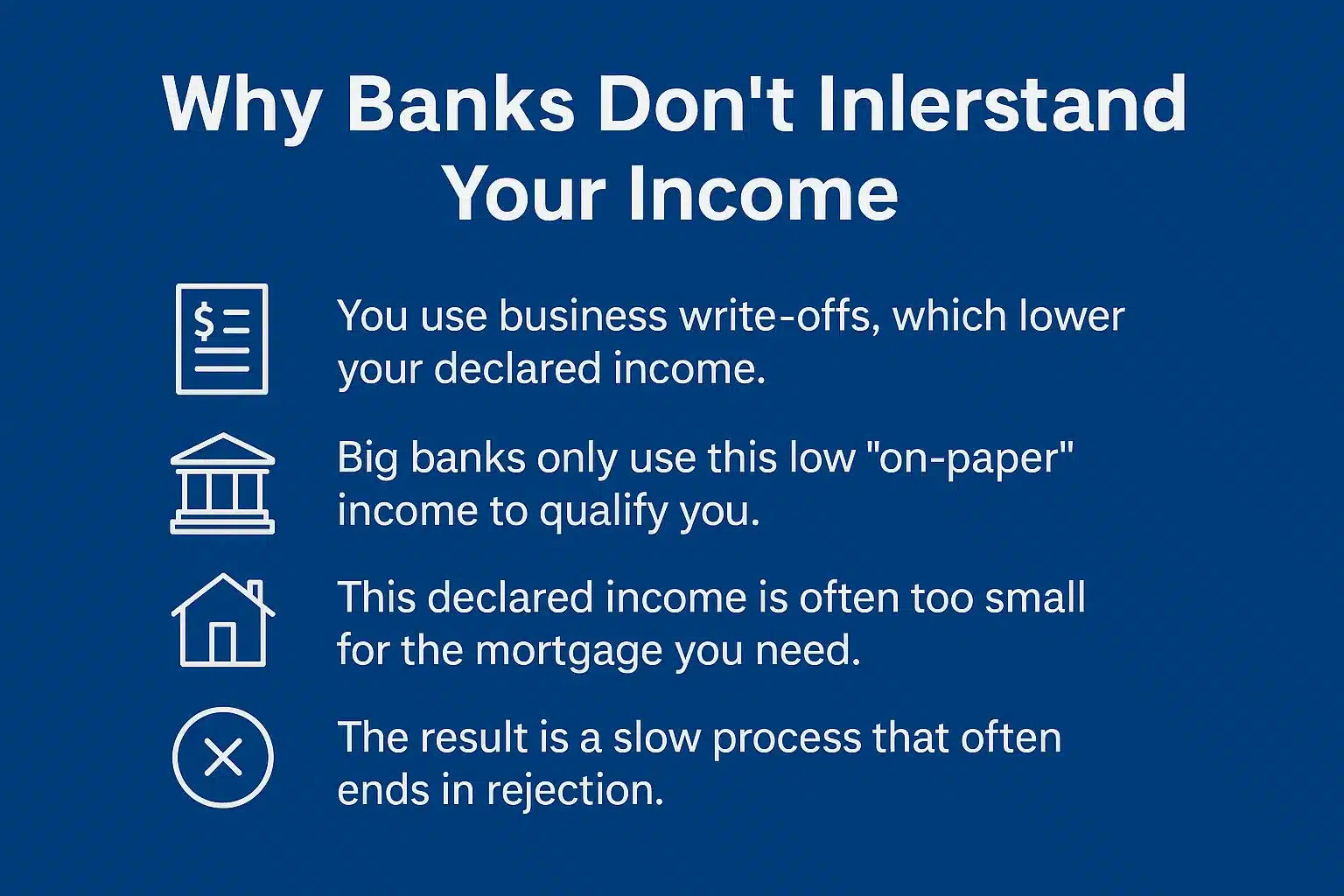
This is why the mortgage approval process is often longer and harder for entrepreneurs.
Understanding Your Options: The 3 Types of Lenders in BC
The good news is that not all lenders have the same strict rules. Understanding the three main types of lenders is the key to getting your mortgage approved.
A-Lenders (The Big Banks)
These are the major banks like TD and Scotia. They have the strictest rules, require years of documents, and focus almost entirely on the low net income you declare on your taxes.
B-Lenders (The Alternate Solution)
These are large, trusted financial companies like Equitable Bank and Home Trust. They are much more flexible than the big banks and are often the perfect solution for self-employed people.

C-Lenders (Private Lenders)
These are the most flexible lenders of all. They focus almost completely on your property’s equity, which is its value minus any existing mortgage. They are a great option for unique situations, whether you need a private purchase loan or want to get a home equity loan.
The “Stated Income” Mortgage
The “Stated Income” mortgage is a special program offered by B-Lenders, and it is the best tool for self-employed people. Here is how it works in simple terms.
- It’s NOT “No Income”: First, it is important to know that this is not a “no income” loan. You still need to have a healthy, successful business.
- It Uses Bank Statements: Instead of only looking at your tax returns, the lender will look at 6 to 12 months of your business bank statements.
- It Qualifies You for More: Based on your business’s real revenue, the lender will work with you to “state” a reasonable, higher income.
Watch the Full Guide
For a detailed explanation of these concepts, watch this video. Our co-founder, Raghav Manchanda, breaks down everything you need to know.
What You Need for a Mortgage with a Private Lender
Compared to a bank, the paperwork for a private lender is often much simpler. They understand how business owners operate and take a common-sense approach. Here is what they typically look for:
- Proof of Self-Employment: You’ll usually need to show your business has been active for at least a year or two.
- Recent Bank Statements: These help show that your business has a healthy and consistent cash flow, rather than just looking at taxable income.
- A Large Down Payment: A strong down payment (or existing equity) shows you are financially stable and lowers the lender’s risk.
- Property Details: The lender will need information about the home you want to buy, as it acts as the primary security for the loan.
- A Good Credit Score: While your income is viewed more flexibly, a good credit history helps prove you are a reliable borrower.
The Traditional Bank Approach: The Strict Checklist
When you walk into a major bank (A-Lender), you are stepping into a system designed for employees, not entrepreneurs. Their risk models rely heavily on consistency, so they often hand self-employed applicants a daunting laundry list of requirements. For many business owners, gathering these documents isn’t just a hassle—it often highlights the “low” income you declared to save on taxes, rather than the money you actually have available.
The Standard Bank Document Checklist:
If you apply with a traditional bank, expect to provide:
- T1 General Tax Returns: Typically for the last 2 to 3 years.
- Notices of Assessment (NOA): To prove you don’t owe any back taxes to the CRA.
- Financial Statements: Balance sheets and income statements (if you are incorporated).
- Articles of Incorporation or Business License: To prove the longevity of your business.
- Proof of Down Payment: A 90-day history of your bank accounts.
The Problem With This List:
The bank looks primarily at your Net Income (Line 15000) on these documents. Because you likely used legitimate write-offs to lower that number, this paperwork tells the bank you can’t afford the mortgage even if your business bank account says otherwise.
4 Tips to Boost Your Chances of Approval
Even with flexible lenders, preparation is key. Taking these steps before you apply can help you secure a better interest rate and a faster “yes.”
- Keep Your Taxes Current: Nothing scares a lender away faster than owing money to the CRA. Ensure your income taxes and GST/HST are paid up to date, even if your declared income is low.
- Separate Your Finances: If you haven’t already, keep your business and personal expenses in separate bank accounts. “Clean” bank statements make it much easier for B-Lenders to verify your true cash flow.
- Protect Your Credit Score: While private lenders are lenient, a higher credit score often unlocks lower fees. Pay your bills on time and try to keep your credit card balances below 30% of their limit.
- Save a Larger Down Payment: In the world of self-employed mortgages, cash is king. A larger down payment (typically 20% or more) significantly reduces the lender’s risk and opens the door to more competitive programs.
Real-World Examples: Case Studies from BC Entrepreneurs
Theory is one thing, but here is how these solutions work in real life for our clients at Seven Lending.
Case Study 1: The Electrician Who Bought a $900k Townhouse
We recently worked with an electrician whose business had $250,000 in annual revenue. However, he only showed $50,000 in net income on his taxes. Using a Stated Income program, we helped him qualify for a $900,000 townhouse. It is something a big bank would have immediately rejected.
Case Study 2: The Realtor Who Secured an Investment Property
A realtor found a great deal on a property but did not have enough verifiable Canadian income to get a bank loan. By using a private mortgage in BC, his approval was based on his 35% down payment and the property’s value. This allowed him to secure the property quickly with a flexible, open mortgage.
Mortgages for Your Business vs. Your Home
It’s important to know that the type of mortgage you need depends on what you are buying.
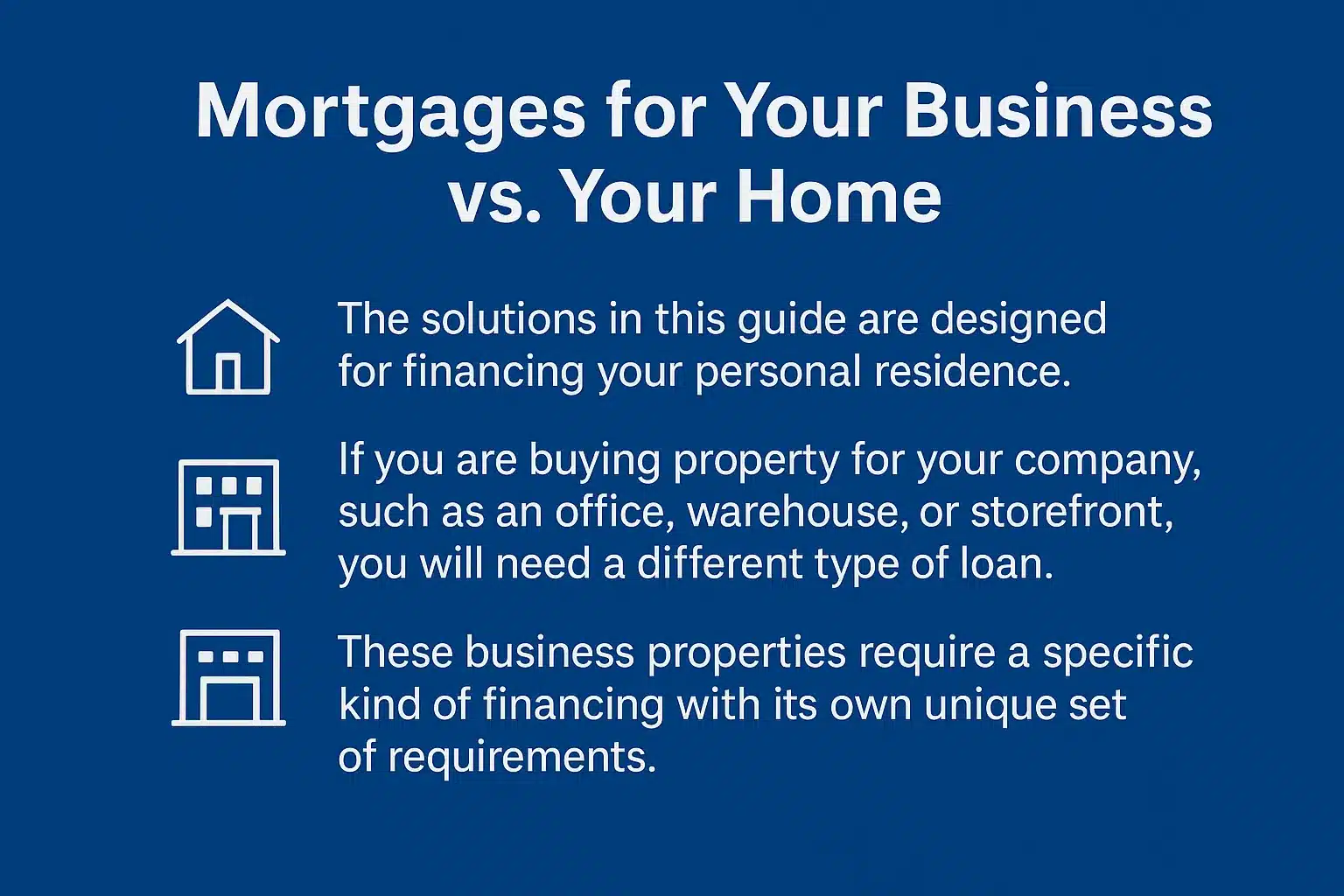
For those situations, the correct tool is a commercial mortgage, which is structured differently from a residential loan.
Conclusion
How to get a mortgage if you are self-employed is not about changing your business; it’s about finding the right lender. The key takeaway is that you have powerful options beyond the big banks. By using solutions like a Stated Income mortgage, you can get approved based on your business’s real financial strength.
If a bank has told you “no,” our team is here to help you get to “yes.” You can learn more about us and our commitment to helping entrepreneurs across British Columbia succeed.
About the Author:
As the Co-Founder of Seven Lending, Raghav Manchanda is passionate about helping British Columbia’s entrepreneurs achieve their property goals. He specializes in alternative financing, focusing on simplifying the mortgage process for self-employed individuals whom traditional banks often overlook.