


In British Columbia, finishing a mortgage can come with a few small costs, with the discharge fee typically ranging from $75 to $400. This administrative fee is charged by your lender for the final paperwork. Our guide breaks down what is a mortgage discharge fee so you know exactly what you’re paying for. Keep reading to see how this small fee is different from a much larger penalty.
What Is a Mortgage Discharge Fee
In simple terms, a mortgage discharge fee is a small administrative charge from your lender. When you take out a mortgage, the lender places a legal claim on your property’s title, which is called a lien. This fee covers the lender’s cost to do the paperwork to remove that claim.
Think of it as the final step that officially makes your property free and clear from that specific debt. You might also hear this fee called a mortgage release fee, but it means the same thing.
When Do You Pay a Mortgage Discharge Fee?
This fee doesn’t apply all the time, but it comes up in a few very common situations. Here’s a quick breakdown of when you can expect to see it:
1. Paying Off Your Mortgage in Full
Once you’ve made your final mortgage payment, the lender’s claim on your property needs to be removed. The lender charges this fee to complete the process of discharging a mortgage, leaving your property title clear.
2. Refinancing or Switching to a New Lender
If you find a better mortgage rate at a different bank or lender, you’ll need to discharge your old mortgage first. Your old lender will charge this fee to release their claim so the new lender can register theirs.
If you’re switching lenders to access more cash, don’t let a $300 fee stop you from unlocking thousands. Use our Home Equity Calculator to see how much you can borrow before you switch.“
3. Selling Your Home
When you sell your home, your existing mortgage has to be paid off completely. The discharge fee is part of this process to ensure the new owner gets a clean property title.
4. Accessing Home Equity with a New Loan
Sometimes, you might replace your current mortgage with a new one to unlock some of your home’s value. This is a common step when setting up different types of home equity loans or other financing.
Is your current lender making it difficult to access your equity? Sometimes it’s better to pay the discharge fee and move to a lender that says ‘Yes.’
Explore our Home Equity Loan options that approve based on your property value, not your credit score.
If the discharge fee and prepayment penalties are too high, you might qualify for a 3rd Mortgage to get the cash you need without touching your first mortgage.
Discharge Fee vs. Prepayment Penalty: What’s the Difference?
It is very important not to confuse a discharge fee with a prepayment penalty. They are two very different things, and one is much more expensive than the other.
A prepayment penalty can be thousands of dollars, but if you are consolidating high-interest credit card debt, you could still save $500+ per month. Run your numbers through our Debt Consolidation Calculator to see if the switch is worth the cost.

How Much is the Mortgage Discharge Cost in BC?
The total cost is broken down into two main parts:
- Lender’s Fee: This typically ranges from $75 to $400, depending on your lender. This fee only covers the bank’s internal administrative work.
- Legal Fees: You will also pay a separate fee to your lawyer or notary. This covers their professional services for preparing and filing the official discharge documents with the Land Title Office.
When you are exploring your options, working with mortgage brokers can help you understand all the potential costs upfront.
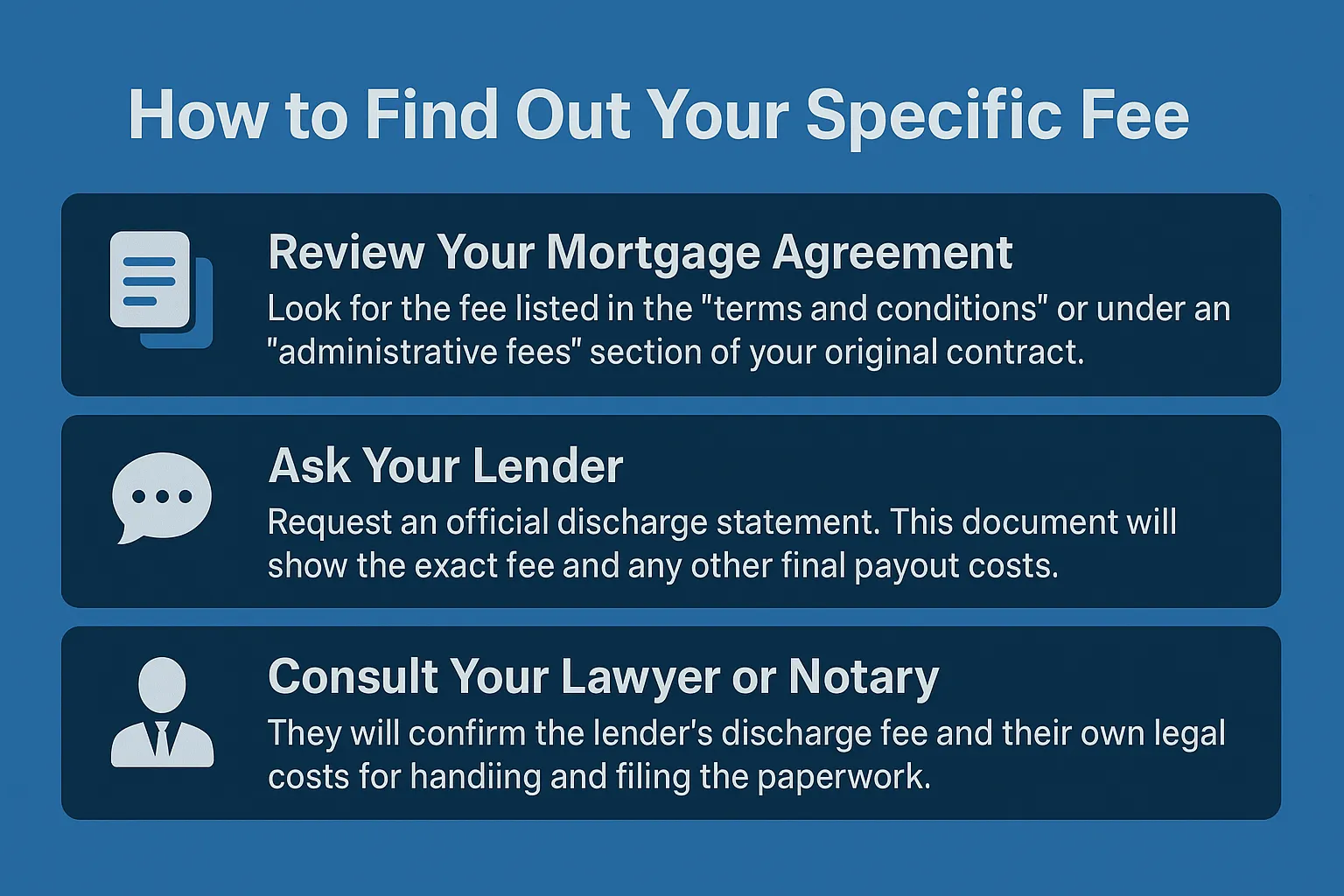
How to Find Out Your Specific Fee
Finding your exact fee is simple. Here are three places to look:
Not sure what your bank is going to charge you? Our team can review your mortgage statement and find out for you. Click here to start a 1-minute assessment and we’ll help you navigate the discharge process.
Conclusion
A mortgage discharge fee is a normal and expected part of most mortgage transactions. It is a standard administrative cost for the final paperwork, and it’s much smaller than a prepayment penalty. Knowing about this fee ahead of time can help you budget correctly for your sale, refinance, or final payment.
We hope this guide has clearly answered what is a mortgage discharge fee. By understanding these small costs, you can move forward with your financial goals without any surprises. If you have more questions, the team at Seven Lending is always here to provide clear and helpful information.
About the Author:
Raghav Manchanda, Co-Founder of Seven Lending, is an expert in British Columbia’s alternative financing market. He is dedicated to making complex mortgage topics, like discharge fees, easy for homeowners to understand, empowering them to make confident and informed financial decisions.